History
The Piano di Magadino
Park
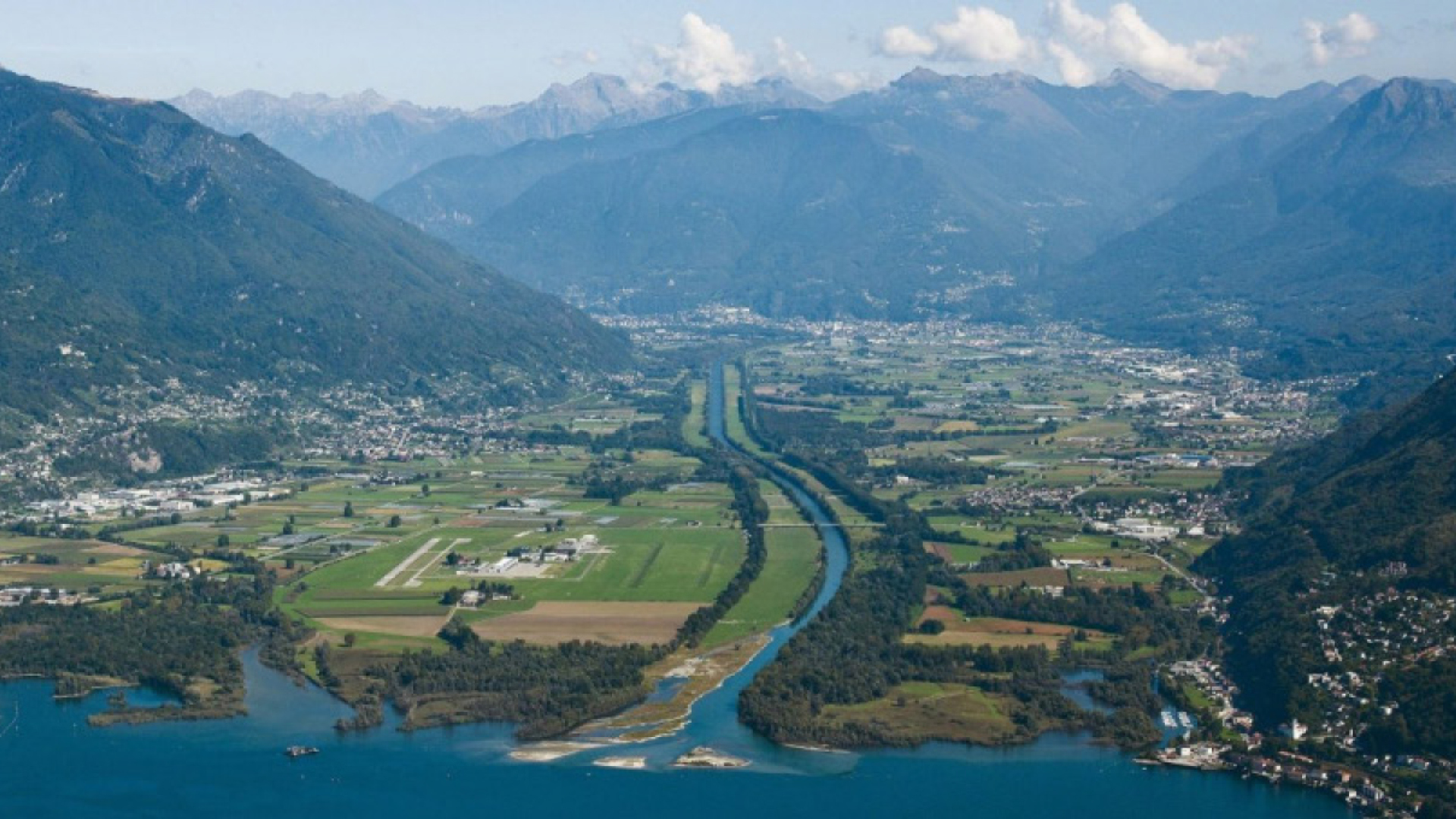
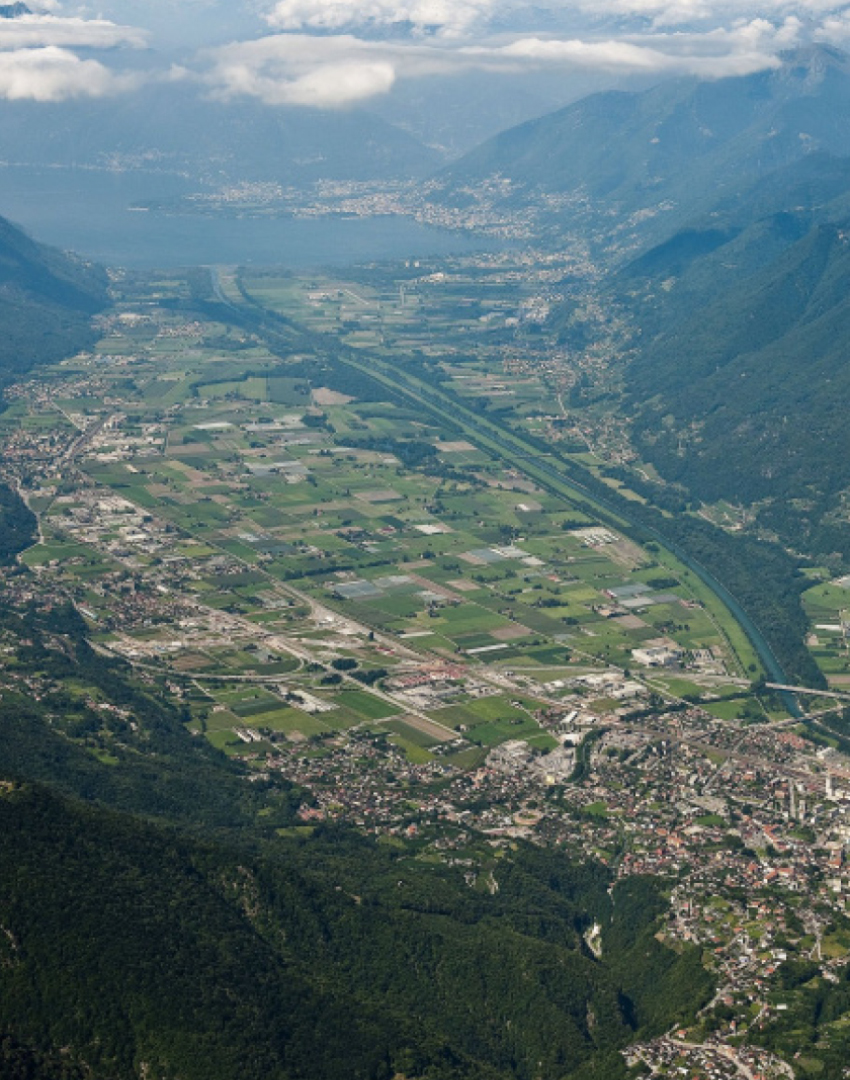
The Piano di Magadino is a vast plain located south of the Alps in the Canton of Ticino, in the area between Bellinzona and Lake Maggiore. Due to its morphology and historical evolution, it is unique within the Ticino region and the entire Swiss Confederation. In fact, it is the largest plain in the Canton. Over the past decades, major infrastructure and production activities have developed within it.
Today, the area is a resource for agriculture, as well as a significant natural oasis—thanks in particular to the Bolle di Magadino protected area—and a space for recreation and local tourism. Its landscape is thus composed of natural, rural, and man-made elements that make it a territory rich in contrasts and constantly evolving. The future of this space, no longer confined solely to the 20th-century image that designated it as the “granary of Ticino,” is the subject of planning and development strategies intended to enhance its various characteristics and functions.
One of the main players in this framework today is the Piano di Magadino Park, established in 2014 with the aim of promoting a synergistic development of the territory’s different vocations—agriculture, nature, and recreation—within the urban area between Locarno and Bellinzona.
Hectares of surface area
Of the total surface area of the Piano di Magadino
The Park includes the agricultural and natural space (including the Bolle di Magadino wetland of national importance) that extends along the course of the Ticino River for a length of nearly 11 km and an average width of about 2 km. This area does not include building zones, with the exception of certain areas for buildings and facilities of public interest.
Mission
Safeguarding the future of the territory
The PUC (Cantonal Utilization Plan) of the Piano di Magadino Park is a territorial project that, based on a development vision anchored in the Cantonal Master Plan, contributes to the promotion of territorial values that deserve to be preserved over time. Eight main themes emerge from the document, corresponding to as many objectives that currently guide the actions of the Park Authority:
Landscape
Enhancing landscape quality, ecological richness, and the variety of biodiversity.
Agriculture
Strengthening the agricultural sector and supporting farms by encouraging collaboration.
Nature
Protecting, managing, and promoting natural components and ecological functions.
Recreation
Enhancing local recreation as a component of the regional tourism offering.
Synergies
Promoting synergies between agriculture, nature, and recreation.
Mobility
Ensuring coordinated mobility tailored to the Park’s objectives.
Environment
Improving environmental quality within the Park.
Information
Informing and raising awareness about the Park’s content and values.